Most homeowners pick their 14x18x4 air filter the same way: by guess. The label says MERV-something, the size matches the slot, and into the system it goes. That's how five myths about these 4-inch filters keep costing families money, comfort, and the clean air they thought they were paying for. We've watched it happen in homes across South Florida for more than a decade, and we'd like to clear the record.
Get the filter right and you fix three problems at once: cleaner air, lower bills, and an HVAC system that actually lasts. High-quality 14x18x4 air filters built for residential HVAC systems are the cheapest and fastest move most homeowners can make to protect all three. An air filter is folded media built to catch particles at specific sizes. Pleat count, density, and frame quality decide how well it does that job, which is why two filters carrying the same MERV rating can perform very differently. Pair the right filter with regular HVAC tune-ups and you've got a system that delivers on its promises.
TL;DR Quick Answers
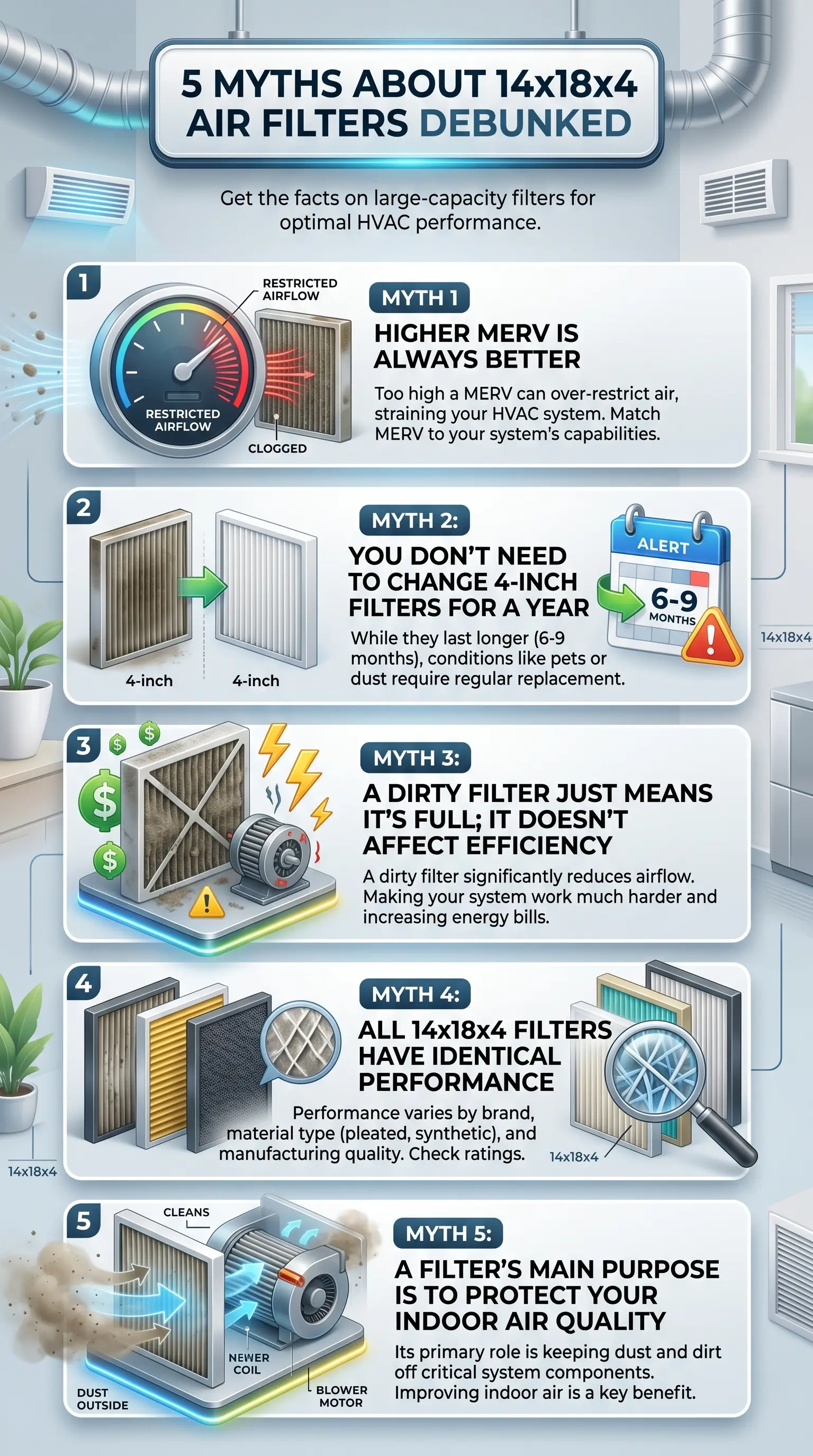
Myth 1. Bigger isn't automatically better. Fit and static pressure matter.
Myth 2. Brand, pleats, and media quality drive the real performance gap.
Myth 3. Replace by schedule, not by appearance.
Myth 4. Highest MERV doesn't equal best. Match it to your system.
Myth 5. Premium filters protect a far more expensive HVAC system.
Top Takeaways
A 14x18x4 filter only outperforms a thinner filter when it actually fits your housing and your blower can handle the static pressure.
Two filters with the same MERV rating can perform very differently. Pleat count, media density, and frame quality all matter.
Inspect monthly and replace your 4-inch filter every 6 to 12 months, sooner with pets, smoke, allergies, or active renovations.
The best MERV for your home is the highest one your equipment is rated to handle. This MERV 13 explained guide breaks down the real trade-offs.
A premium pleated 14x18x4 filter typically pays for itself through fewer service calls and lower energy bills.
The Five Myths, Busted
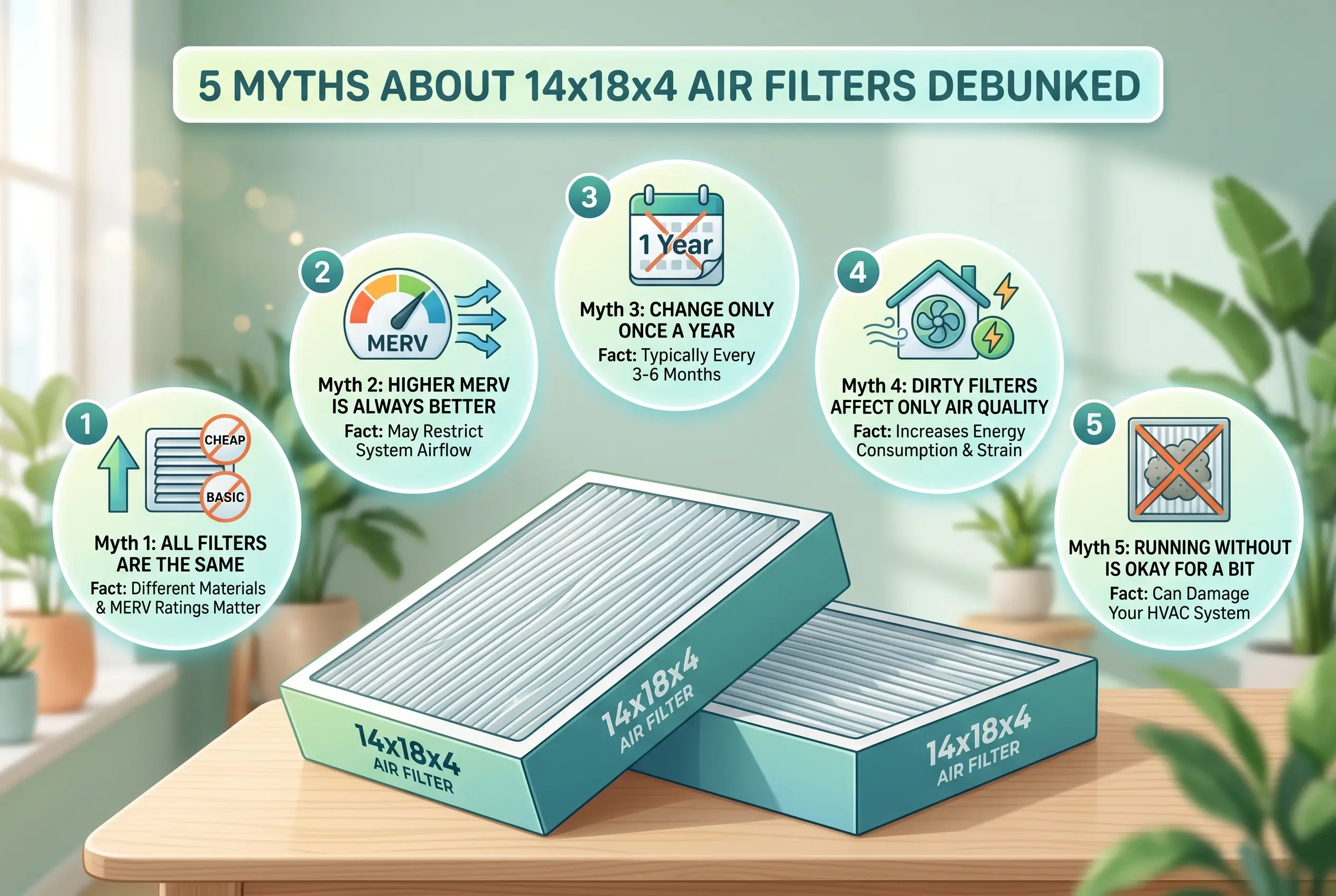
Myth #1: Bigger or thicker is automatically better
A 4-inch filter has more surface area and a longer service life than a typical 1-inch filter, but only when your system was actually built for one. The housing has to accept the depth, and the blower has to push air through the extra static pressure thicker media creates. If your equipment was sized for thinner filter options or narrow filter dimensions, forcing in a 4-inch filter just creates bypass air around the frame, a dirty evaporator coil, and a shorter life for the whole system.
Myth #2: Every 14x18x4 filter performs the same
Not even close. Pleat count, media density, frame stiffness, and electrostatic treatment swing performance dramatically between brands. We've put dust defense filters next to comparable 2-inch options on the test bench, and two filters carrying the same MERV number can behave very differently once you put them in a humid Florida home full of pet dander, pollen, and the occasional wildfire-smoke event.
Myth #3: Wait until it looks dirty to swap it
By the time the surface looks gray, the filter has already been choking airflow for weeks. A good 4-inch filter usually lasts 6 to 12 months in a residential system, but pets, renovations, wildfire smoke, and Delray Beach humidity all shorten that window. The same goes for common furnace sizing. A 60-second visual check once a month and a recurring calendar reminder will save you far more than the price of any filter.
Myth #4: The highest MERV rating is always the best choice
Higher MERV catches smaller particles, but it also creates more airflow resistance. Push the rating past what your blower was sized for and you'll choke airflow, raise your power bill, and shorten the motor's life. For most residential systems, MERV 8 options cover the basics, while MERV 11 options add real allergen control without taxing a typical blower. Whatever you choose, central air filtration has to match your equipment manufacturer's spec sheet. That document has the final word, every time.
Myth #5: Premium 14x18x4 filters aren't worth the price
Cheap filters quietly cost more than they save. Premium pleated options like allergen defense filters protect the most expensive components in your home, run longer between changes, and keep the air your family breathes noticeably cleaner. If you're comparing prices across stores, look at additional filter listings and bulk pleated packs before you commit. And if you're worried about indoor air at the level of mold, VOCs, or wildfire smoke, layer your filter strategy with the air purification benefits available from whole-home solutions.
“After more than a decade making filters and watching how they hold up in actual homes, we've found one pattern over and over: homeowners who get 14x18x4 right treat the filter as part of the system, with depth matched to the cabinet, MERV matched to the blower, and a replacement schedule they actually keep. Skip those three steps and the system tells on you, usually with a much bigger repair bill.”
7 Essential Resources With Verified Links
Every resource below comes from a different non-commercial domain. They're government agencies, public-health nonprofits, and standards bodies, so you can verify what we said and go deeper on your own.
U.S. Environmental Protection Agency — Guide to Air Cleaners in the Home — https://www.epa.gov/indoor-air-quality-iaq/guide-air-cleaners-home
ENERGY STAR — Heat & Cool Efficiently — https://www.energystar.gov/saveathome/heating-cooling
U.S. Department of Energy — Air Conditioner Maintenance — https://www.energy.gov/energysaver/air-conditioner-maintenance
American Lung Association — Clean Air Indoors — https://www.lung.org/clean-air/indoor-air
National Air Filtration Association — Understanding MERV (ANSI/ASHRAE 52.2 User's Guide) — https://www.nafahq.org/understanding-merv-nafa-users-guide-to-ansi-ashrae-52-2/
ASHRAE — Technical Resources & Standards — https://www.ashrae.org/technical-resources
AirNow — Indoor Air Filtration Factsheet (PDF) — https://www.airnow.gov/sites/default/files/2021-12/indoor-air-filtration_0.pdf
3 Statistics With Verified Links
Indoor concentrations of some pollutants are often 2 to 5 times higher than typical outdoor concentrations. — U.S. EPA, https://www.epa.gov/report-environment/indoor-air-quality
Replacing a dirty, clogged HVAC filter with a clean one can reduce your air conditioner's energy consumption by 5% to 15%. — U.S. Department of Energy, https://www.energy.gov/energysaver/air-conditioner-maintenance
Nearly half of the energy used in your home goes to heating and cooling, making smart filter and HVAC choices one of the highest-leverage savings moves a homeowner can make. — ENERGY STAR, https://www.energystar.gov/saveathome/heating-cooling
Final Thoughts and Opinion
Here's our honest read after years of obsessing over indoor air. A 14x18x4 filter is one of the best moves a homeowner can make, but only when it's sized, rated, and replaced correctly. The myths above don't just waste money. They quietly chip away at the air your family breathes every day. A filter is a small part with an outsized job, and treating it with the respect it deserves is exactly the kind of move a family protector makes. You don't need to be an HVAC professional. You need the right filter, the right MERV for your system, and a calendar reminder you actually stick to.
Frequently Asked Questions
How often should I replace a 14x18x4 air filter?
A quality 4-inch pleated filter usually lasts 6 to 12 months in a residential system. Check it monthly and replace sooner if you have pets, allergies, wildfire-smoke exposure, or active renovations.
What MERV rating should I choose for a 14x18x4 filter?
MERV 8 to MERV 13 is the residential sweet spot for most homes. Always confirm the maximum MERV your HVAC equipment is rated for before going higher.
Can I use a 14x18x4 filter if my system originally took a 1-inch filter?
Only if the cabinet physically accepts a 4-inch filter and the blower can handle the additional static pressure. Otherwise you'll get bypass air and reduced performance. Have an HVAC professional confirm before swapping.
Do 14x18x4 air filters help with allergies and pet dander?
Yes, especially in the MERV 11 to MERV 13 range. The deeper media holds more debris, so the filter keeps performing well for longer between changes.
Are washable 14x18x4 filters worth it?
For most homes, no. Compared with washable filter options or reusable filter media, a high-quality disposable pleated filter usually captures more particles and avoids the microbial-buildup risk that comes with filters that don't fully dry between uses.
Ready to upgrade with confidence?
Tap to shop the right fit and give your family the cleaner air, lower bills, and longer system life that come with getting the filter right. Better Air For All starts with the filter you choose today.
Learn more about HVAC Care from one of our HVAC solutions branches…
Filterbuy HVAC Solutions - Miami FL - Air Conditioning Service
1300 S Miami Ave Apt 4806 Miami FL 33130
(305) 306-5027
https://maps.app.goo.gl/Ci1vrL596LhvXKU79